Seven Smart Questions to Ask at the Pharmacy Counter Before You Swipe Your Card
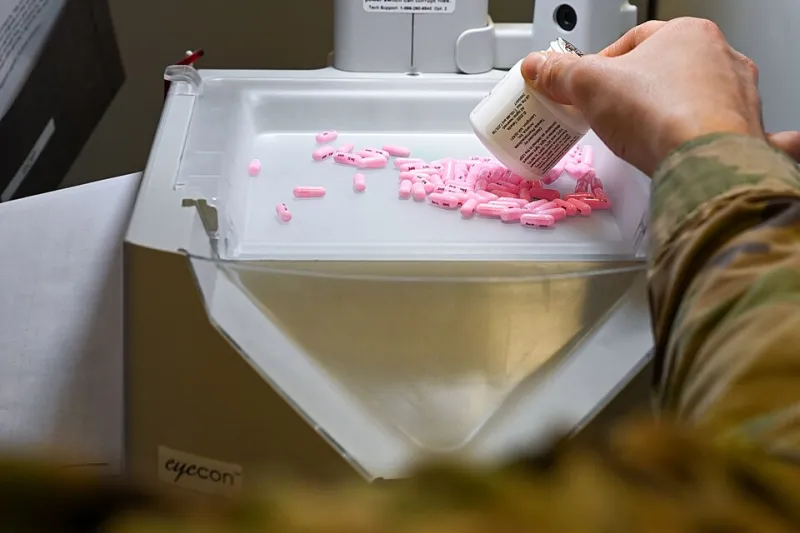
Photo: U.S. Air Force photo by Senior Airman Jessica Sanchez-Chen, Public domain, via Wikimedia Commons
You hand over the prescription. The tech types for a minute, frowns slightly, and says, “That'll be $184.” Maybe you pay it because you need the medicine. Maybe you quietly wonder whether that number is normal. Either way, the counter is not the finish line—it is a checkpoint. A few calm questions can uncover a cheaper generic, a missing prior authorization, or a cash price that beats your insurance rate.
Here is a playbook for the next time you are staring at a copay that feels off. You do not need to be a billing expert. You just need to know what to ask, and who to ask.
1. “Is there a generic version of this, and what would it cost?”
This is the first question for a reason. Many brand-name drugs have generic equivalents that work the same way for most people. The price difference can be dramatic—sometimes a $150 brand copay becomes a $15 generic copay, or a cash generic price drops below both.
Ask specifically: “Is a generic available for this exact medicine and strength?” If the answer is yes, ask whether your prescriber needs to be contacted or whether the pharmacy can switch it under your state's rules. Some prescriptions are written “brand medically necessary,” and that note matters. If there is no generic, ask about therapeutic alternatives in the same class. Your pharmacist cannot diagnose or prescribe, but they can tell you what exists and suggest a conversation with your doctor.
2. “Is this my insurance price or the cash price—and can we compare both?”
Insurance is not automatically cheaper. That sounds strange, but it is true, especially early in the year when a deductible is in play or when a drug is on a higher formulary tier. A pharmacy can often run both a cash price and an insurance claim. Ask: “Can you tell me what this would cost if I paid cash instead of using my insurance?”
If the cash price is lower, you can choose it—but ask how that affects your deductible and out-of-pocket maximum. Sometimes paying cash saves money today but does not count toward your plan's progress. Other times it is a clean win. The key is that you are allowed to ask for the comparison before you pay.
3. “Does this medication need prior authorization, and what happens if it is denied?”
Prior authorization is a common reason a copay looks like a mortgage payment. Your insurer wants proof that a drug is medically necessary before covering it. If the pharmacy says your claim is pending or rejected, ask what the next step is. Do they need your prescriber's office to send clinical notes? Is there a form you can track? How long does the appeal usually take?
A realistic scenario: a patient with asthma is prescribed a newer inhaler. The copay comes back at $250 because the plan prefers a different inhaler. The pharmacist explains the prior authorization process, the prescriber sends documentation, and the plan approves the preferred alternative at $40. No one had to guess—someone had to ask.
4. “Are there lower-cost alternatives in the same drug class?”
This is different from a generic. Two drugs can treat the same condition without being identical molecules. A pharmacist can point out that a different ACE inhibitor, statin, or migraine medication may be on a lower tier. They will not tell you to switch on their own, but they can give you a short list to discuss with your prescriber.
Ask: “Is there a preferred drug on my plan's formulary that treats the same thing?” If you have the formulary—usually a PDF or app through your insurer—bring it or pull it up. The pharmacy team can help you read it.
5. “Can I use a discount card here, and would it beat my insurance price?”
Discount cards, pharmacy coupons, and manufacturer copay cards are real tools, but they are not magic. Some cards work only at certain pharmacies. Some cannot be combined with insurance. Some manufacturer cards are only for brand-name drugs and have annual limits.
Ask the pharmacy technician or pharmacist: “Would a discount card change this price, and are there restrictions?” Then check the card's terms. A $10 coupon that requires a $75 membership is not a deal. A free discount card that lowers a generic from $30 to $12 is worth keeping in your wallet.
6. “Can you look at my full medication list for duplicates or interactions?”
This question is not just about money. If you are picking up a new prescription, ask the pharmacist to review it against everything else you take—including over-the-counter products, vitamins, and anything filled at another pharmacy. That review can catch a duplicate ingredient, a dangerous interaction, or a medicine that is no longer needed.
Bring a current list if you have one. If not, ask the pharmacist to print a list from your profile and update it with you at the counter. This is especially important if you see specialists who prescribe separately or if you use mail order for some medicines and a local pharmacy for others.
7. “When should I ask for a formal medication review?”
Many plans offer a medication therapy management review, sometimes called an MTM. It is a sit-down conversation with a pharmacist about all your medicines, goals, side effects, and costs. It is not an emergency visit. It is a scheduled check-in.
Ask: “Am I eligible for a medication review through my plan, and how do I set it up?” If you have multiple chronic conditions, take several prescriptions, or feel like your regimen has grown without a clear plan, this is worth pursuing. Some pharmacies offer these reviews in person, by phone, or by video.
A quick-reference list for your next counter visit
- Is there a generic, and what does it cost?
- What is the cash price versus the insurance price?
- Is prior authorization involved, and what is the next step?
- Is there a lower-tier alternative in the same class?
- Would a discount card or manufacturer coupon beat this price?
- Can you review my full medication list for duplicates and interactions?
- Am I eligible for a formal medication review?
You do not have to ask all seven every time. Pick the two or three that match your situation. The pharmacy counter can feel rushed, and that is exactly why a short list helps. You are not being difficult by asking. You are doing the same thing you would do at a car repair shop or a hotel front desk: making sure you understand what you are paying for before you pay it.